
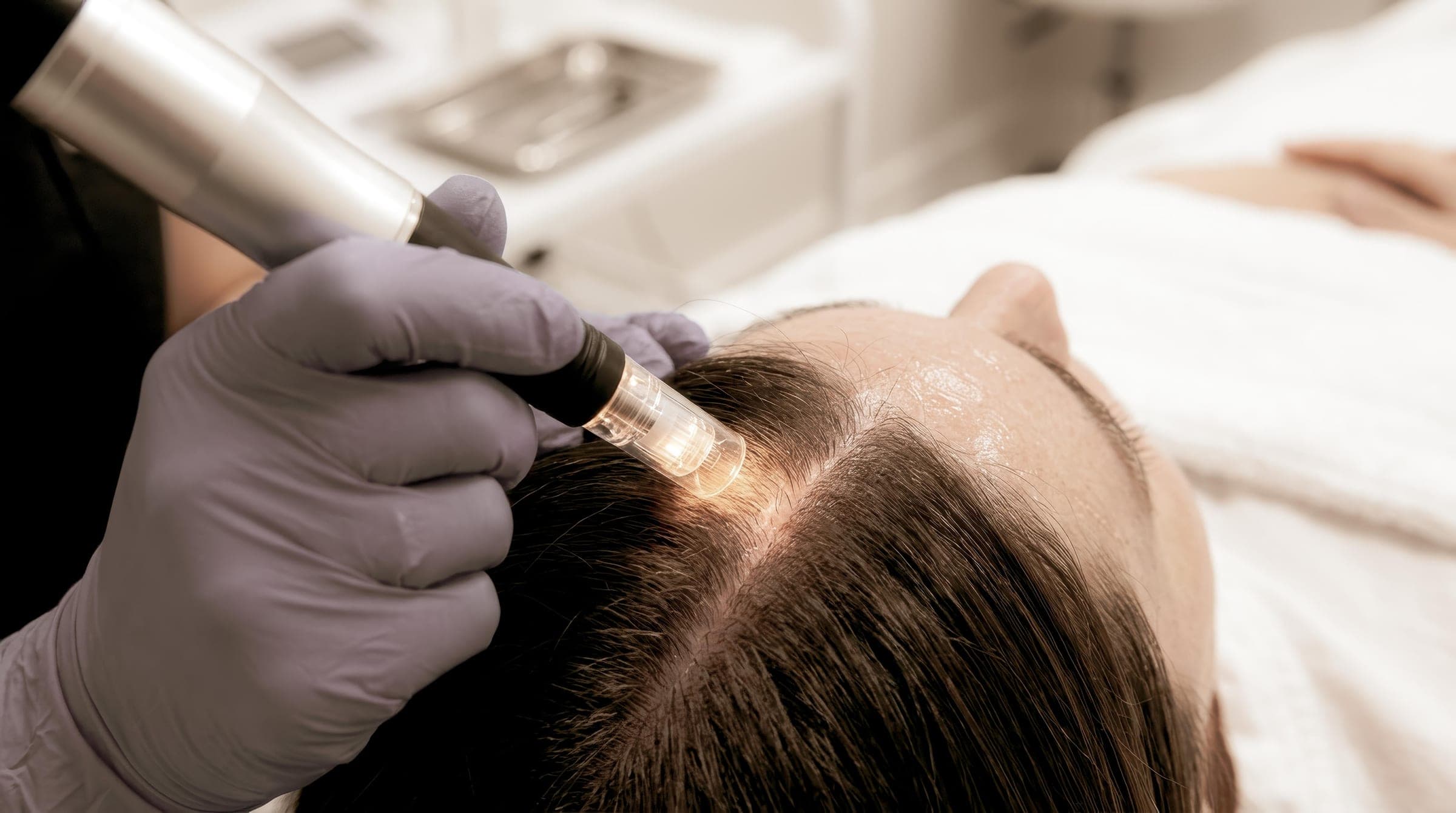
Scalp microneedling uses fine, controlled micro-injuries to stimulate the scalp and encourage follicle activity. While the device is the same one used for facial treatments, the depth, technique, and goals are entirely different — here the aim is follicle stimulation and improved delivery of growth factors rather than collagen remodeling of facial skin.
Dr. Yamany considers scalp microneedling an adjunct therapy. It may be recommended on its own, but it is typically strongest in combination with PRP or PRFM as part of a broader hair loss plan.
Controlled micro-injuries prompt the scalp's natural repair response around the follicle.
The healing response brings more blood flow to the treated area of the scalp.
Pairs directly with PRP or PRFM so growth factors reach the treated area more effectively.
Offered on its own or layered with PRP or PRFM based on your pattern of loss.
Mild scalp tenderness or redness for 1–2 days; most patients return to routine quickly.
Dr. Yamany will recommend the approach that fits your pattern of hair loss, your goals, and what you have already tried.
A straightforward entry point for patients with early thinning, or those who prefer to begin without injections.
Microchannels created during treatment help deliver concentrated growth factors from your own blood directly to the scalp. PRP is often the better pairing here, since it is more liquid and travels through those channels more readily than PRFM.
Fine needles create precise micro-channels in the scalp at a depth selected for follicular tissue. This triggers a localized healing response and increases blood flow to the treated area.
Those same channels temporarily improve how well growth factors reach the follicle, which is why the treatment is often combined with PRP or PRFM.
Before your appointment: review our Scalp Microneedling Aftercare handout for guidance on washing your hair, hats and exercise, and timing around color or chemical treatments.
The device is similar, but almost nothing else is. Scalp treatment uses different depth settings and technique, and the goal is follicle stimulation rather than collagen remodeling. Aftercare differs too, since washing and styling hair introduces considerations facial treatment does not have. If you are interested in texture, pores, or acne scars, see our facial microneedling page.
A series spaced several weeks apart is typical, followed by periodic maintenance. Because hair grows in cycles, meaningful change is measured over months rather than weeks. Dr. Yamany will set a schedule based on your pattern of loss.
Topical numbing is applied beforehand, and most patients describe the sensation as pressure or mild prickling. Some scalp tenderness for a day or two afterward is normal.
We generally ask you to wait until the following day, then use a gentle shampoo and lukewarm water. Heavy sweating, hats, and chemical or color treatments should be delayed as well — the specifics are in our aftercare handout.