
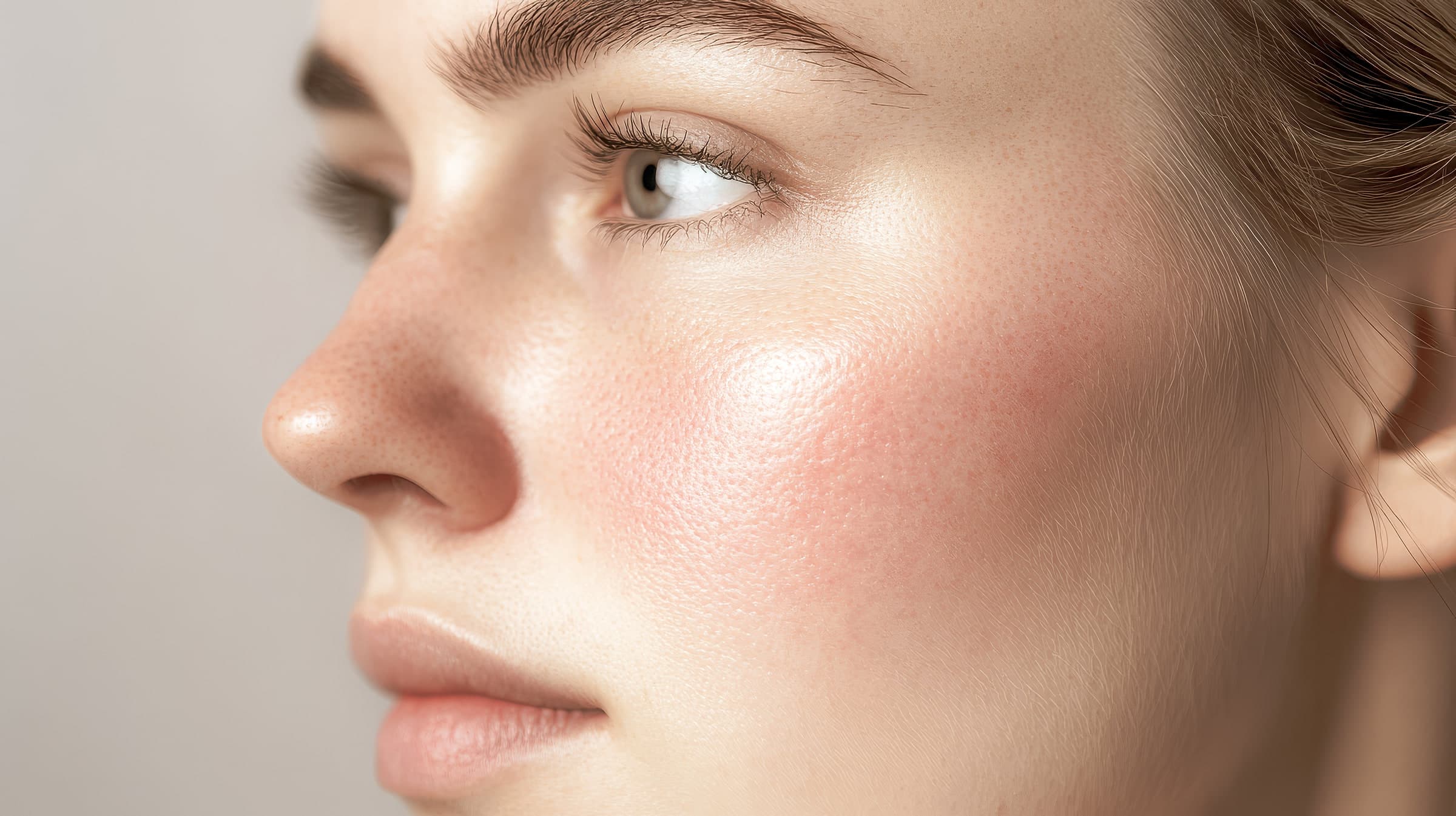
Redness across the cheeks and nose, fine vessels that stay visible, and spider veins on the legs all share the same underlying feature: blood vessels near the surface of the skin that have become dilated enough to see. Because they share a target, they respond to the same technology.
We treat these concerns with the Excel V+ laser, which delivers energy absorbed specifically by hemoglobin inside unwanted vessels while leaving surrounding skin intact.
Diffuse background redness across the cheeks, nose, and chin that does not fade on its own.
Broken capillaries, telangiectasia, and cherry angiomas, most often around the nose and cheeks.
Fine superficial leg veins, treated with the deeper 1064 nm wavelength.
Dual-wavelength laser therapy that targets visible vessels, diffuse redness, and superficial leg veins. Learn more about the excel V+ laser.
532 nm for superficial facial vessels and redness, 1064 nm for deeper or larger vessels and leg veins.
Consistent sunscreen use protects your results and slows the formation of new vessels.
Sessions are brief, and integrated cooling helps keep treatment comfortable.
Mild redness or slight swelling is common for one to three days afterward.
Improvement builds over several weeks as treated vessels clear, and a series of sessions may be recommended for diffuse redness.
New vessels can develop over time, so occasional maintenance sessions help keep results looking consistent.
Isolated vessels sometimes resolve after a single session, while diffuse redness and leg veins typically respond best to a series of two to four sessions spaced several weeks apart.
Yes. The Excel V+ offers two wavelengths, so the same platform handles superficial facial vessels and deeper leg veins. They are treated in separate sessions, with settings selected for each area.
Most patients return to normal activity the same day. Mild redness or swelling in the treated area is typical for a day or two, and larger treated vessels may darken briefly before clearing.
Laser therapy addresses the visible vessels and background redness that rosacea can leave behind, but rosacea itself is a medical condition that may also need prescription treatment. If that is what is driving your redness, we will evaluate and manage it through medical dermatology alongside your cosmetic plan.